The Challenge and Gift of Tentmaking Pastors
Introduction
The call to Christian ministry is often understood as distinct from ordinary work, reserved for those employed or ordained by the church. Yet the New Testament presents a vision that integrates faith, labour, and mission into a unified calling. The Apostle Paul embodies this integration. While preaching, he supported himself through tentmaking, choosing to labour “with his own hands” so as not to burden the communities he served (Acts 18:1–4; 1 Thess 2:9). His decision was not merely pragmatic; it reflected the conviction that ministry is not diminished by work, and that both forms of labour bear witness to God’s mission.
Contemporary reflection reinforces this. R. Paul Stevens argues that ministry belongs to the whole people of God and is lived in workplaces, schools, and businesses.[1] Steve Garber similarly describes a “seamless life” where worship, vocation, and relationships form a coherent whole.[2]
This paper employs biblical exegesis, historical analysis, and contextual theology informed by ministerial experience in East Malaysia to examine tentmaking pastoral ministry. In Sabah and Sarawak, many congregations cannot sustain full-time clergy, and pastors commonly work in education, healthcare, agriculture, civil service, or small business alongside their pastoral responsibilities. This paper argues that the challenges and gifts of tentmaking pastors in East Malaysia reveal a theologically integrated model of ministry in which work, faith, and mission are inseparable, and in which the church’s witness is often most transformative within the ordinary rhythms of daily and working life.
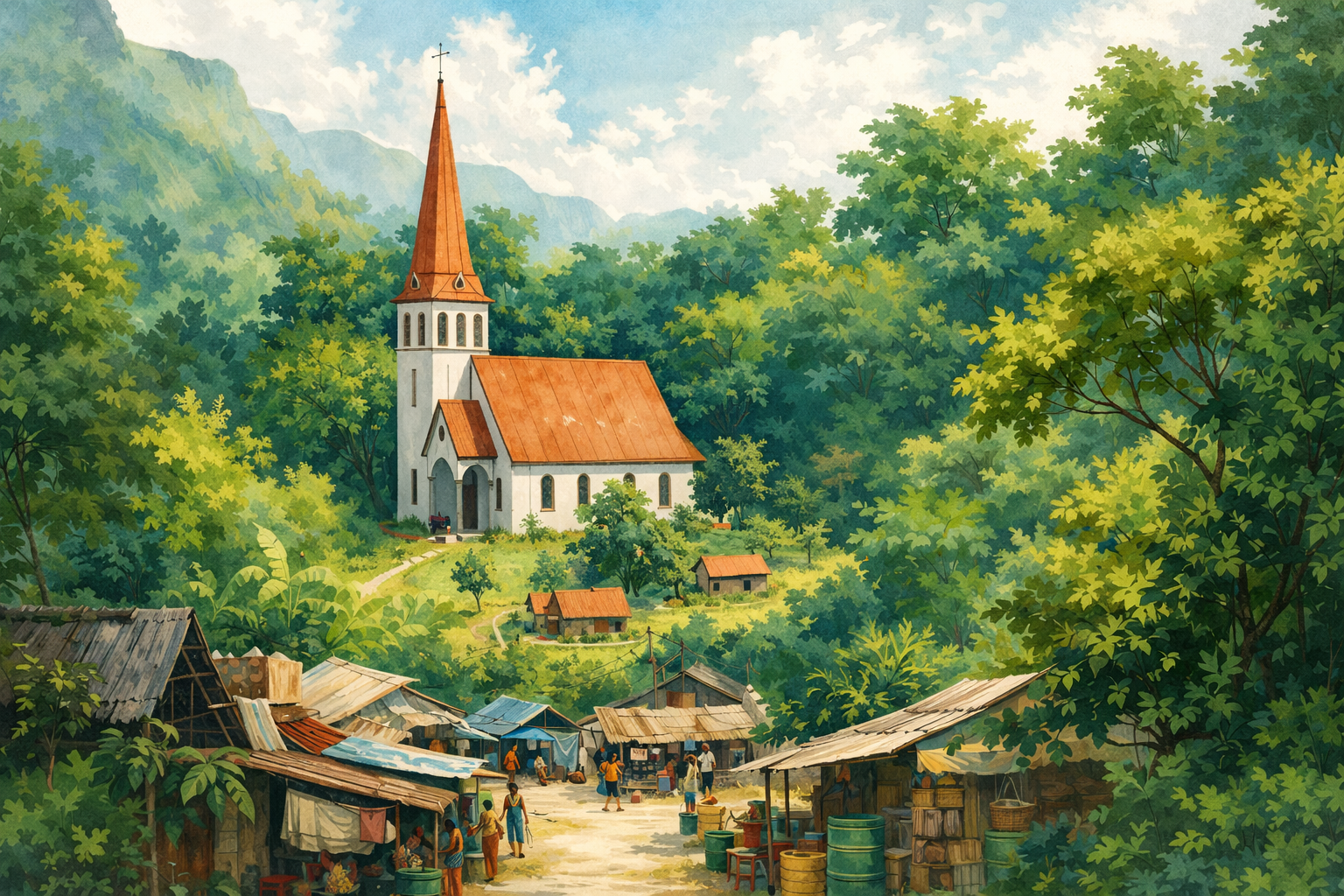
Tentmaking pastoral ministry in East Malaysia must be understood within the region’s distinctive geographic, economic, and cultural landscape. Sabah and Sarawak are marked by dispersed rural communities, limited infrastructure in interior regions, and churches operating with modest financial resources. Congregations serve multi-ethnic and multi-religious populations, including indigenous communities, migrants, and urban professionals, shaping expectations of pastoral leadership grounded in relational presence rather than institutional availability. Within this context, tentmaking emerges not as an exception but as a normative and culturally embedded form of pastoral leadership that enables economic sustainability while fostering shared life with the communities pastors serve.
This paper proceeds in four sections. It first examines the biblical and historical foundations of tentmaking pastoral ministry, tracing its development from the Apostle Paul through key movements in Christian history. It then explores the lived realities of tentmaking pastoral ministry in East Malaysia, attending to its socioeconomic context, challenges, and gifts. Finally, the paper offers a theological reflection and constructive vision that integrates vocation, marketplace ministry, spiritual formation, and ecclesiology, before concluding with implications for pastoral leadership and Christian witness in the region.
2. Biblical and Historical Foundations of Tentmaking Pastoral Ministry
Tentmaking ministry is not a recent response to economic need. It is embedded in Scripture and reflected throughout Christian history. Early leaders carried dual responsibilities, combining spiritual oversight with labour that placed them within the social and economic life of their communities.
2.1 Pauline Foundations Tentmaking
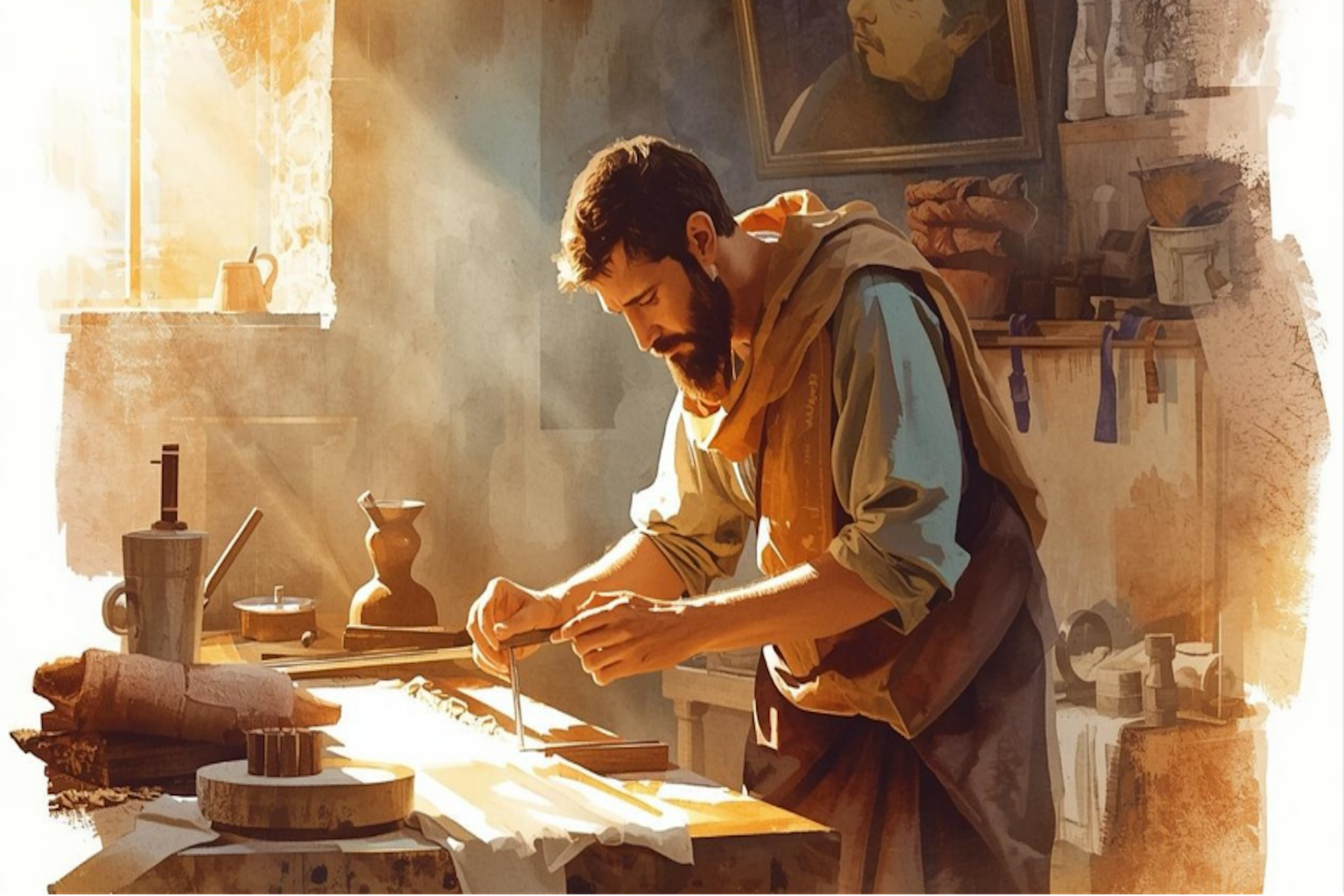
Acts 18 describes Paul living with Aquila and Priscilla in Corinth, working as a tentmaker. Although he possessed the right to receive financial support, he refused it when it risked hindering the gospel. Aquila and Priscilla likewise exercised pastoral authority not through office but through embodied ministry. Early pastoral care emerged from proximity and mutual dependence.
This pattern reveals a pastoral identity grounded in integrity and presence. Paul did not divide his tentmaking from his ministry. He wove both into a single vocation. His economic life provided access to households, workshops, and marketplaces where spiritual conversations unfolded naturally. Leadership was not exercised from a distance but from within the daily realities of ordinary people. Tentmaking therefore becomes a pastoral strategy that mirrors the incarnational logic of the gospel: pastors meet people not only in worship gatherings, but in the rhythms of work, family, and community.
Furthermore, the presence of Aquila and Priscilla highlights that tentmaking leadership was not limited to Paul. They hosted a house church, discipled emerging leaders such as Apollos, and travelled alongside Paul. Their authority did not flow from formal ordination, but from embodied ministry and credibility earned within their trade and relationships. Early pastoral care was rooted in proximity, shared labour, and mutual dependence.
2.2 Economic Leadership in the Early Church
For the first three centuries, churches met in homes, shops, and public spaces. Leaders were household heads, artisans, merchants, or administrators. Their pastoral care was inseparable from hospitality, networks, and shared labour. Ministry flowed through social relationships rather than formal offices.
This structure required pastoral leadership embedded in economic participation. A house church depended on leaders who could provide stability, resources, and relational connections. Spiritual care was exercised not by religious professionals detached from ordinary labour, but by those who worked alongside others and shared their burdens. Pastoral ministry was inseparable from economic vocation. It flowed through everyday social relationships, not ecclesial offices. The social texture of early Christianity therefore, resembled Paul’s model: pastors were shepherds in the community before they were leaders in gathered worship.
2.3 Monastic Wisdom
Later institutionalization produced full-time clergy, yet monastic movements preserved the theology of integrated labour. Benedictine “pray and work” framed manual labour as humility, service, and spiritual discipline. Monastic credibility arose from lived witness, demonstrating that spiritual leadership could coexist with manual and professional work.[3]
While monasticism was not pastoral in the congregational sense, its model carried pastoral implications. Monks taught, counselled, and served communities through their work. Their credibility did not arise from ecclesial status but from lived witness. This heritage demonstrates that spiritual leadership need not be divorced from manual or professional vocations. Work can humanize pastors, guard them from power imbalances, and shape compassion for those they serve. The monastic tradition therefore serves as a theological bridge between Pauline tentmaking and later pastoral expressions.
2.4 Reformation Theology
The Reformers rejected the sacred–secular divide, affirming daily work as participation in God’s mission. Ministry was understood as the calling of the whole church rather than a religious elite. Action in the marketplace could be as faithful as preaching, reframing pastoral identity as unified rather than divided.[4]
This theological shift prepared the way for tentmaker pastors in later centuries. By affirming that vocation is holy wherever it is exercised, the Reformers challenged the assumption that ministry must be financially supported or institutionally contained. Action in the marketplace could be as faithful as preaching in the pulpit. Pastors who carried both responsibilities expressed not a divided life, but a unified calling.
2.5 Mission Movements
The Moravians advanced this pattern by entering cultures as farmers, artisans, and traders. Their trades provided access and relational legitimacy. In the modern era, pastors across Asia, Africa, and Latin America sustain congregations not by retreating from economic pressures but by entering them. Tentmaking restores pastoral ministry to the shared realities of ordinary life.
In the twentieth and twenty-first centuries, tentmaking has become increasingly necessary in regions where economic limitations or religious restrictions make traditional pastoral models unsustainable.[5] Pastors in Asia, Africa, and Latin America often sustain congregations not by distancing themselves from economic pressures, but by entering them. Their dual vocation collapses the artificial separation between professional ministry and daily work, allowing the gospel to be embodied in ordinary contexts.
Tentmaking pastoral ministry thus stands within a continuous biblical and historical trajectory. From Paul’s workshop to Benedictine labour, from Reformation vocation to Moravian mission, the pattern is clear: pastoral identity is most credible when it is embedded in the shared realities of work and community. Far from diminishing ministry, tentmaking restores it to its original context, where pastors are not professionals above the people of God, but shepherds among them.
3. Tentmaking Pastoral Ministry in East Malaysia: Challenges and Gifts

Tentmaking in East Malaysia emerges from geography, economy, and culture. Many congregations in rural Sabah and Sarawak cannot sustain full-time clergy, making tentmaking not exceptional but structural. Pastors support families through professional work while remaining present in ministry.
3.1 Socioeconomic Realities
Rural congregations are small, working across plantations, coastal communities, and government employment. Urban churches also face financial volatility. Tentmaking stabilizes pastors’ households and protects congregations from financial strain. In multicultural contexts, pastors who share economic rhythms are trusted as neighbours rather than outsiders. Van Duzer maintains that daily work is part of God’s creative purposes and a valid arena for Christian participation in His mission.[6] This perspective helps explain how East Malaysian tentmaking pastors bear witness to Christ both through their employment and through their preaching.
Urban congregations in Kota Kinabalu, Kuching, or Tawau also face financial instability. Church budgets must balance rental costs, ministry programmes, and denominational commitments, leaving little capacity for sustained pastoral salaries. Tentmaking pastors ease these pressures by supporting themselves through education, agriculture, healthcare, administration, or business. Their income stabilises their households and protects congregations from budgetary limitations. For many churches, tentmaking becomes a form of stewardship that preserves pastoral leadership without creating dependence or resentment.
These realities are intensified by the multicultural character of East Malaysia. The region includes Kadazan Dusun, Murut, Iban, Malay, Chinese, and Orang Ulu communities, each with distinctive expectations around leadership and social participation. Pastors who share in the economic rhythms of their people are more easily trusted. They are not outsiders funded by institutions but neighbours and kin who work alongside those they shepherd. This shared experience carries authority in communities where respect is earned through participation in everyday life.
3.2 Pressures of Dual Responsibility

Tentmaking pastors live under time and emotional strain. Work schedules intersect with funerals, hospital visits, sermon preparation, and pastoral crises.[7] Expectations of availability intensify pressure; pastors may be judged by standards set for full-time clergy. Some denominations lack frameworks for tentmaking, leaving pastors isolated or treated as temporary. Internally, pastors may question whether they are “truly” pastors or workers who preach. Without a theology of integrated vocation, this can destabilise pastoral identity.
Research in organizational psychology highlights that individuals carrying dual roles experience elevated role conflict, emotional fatigue, and identity stress. Maslach and Leiter note that burnout often arises when vocational demands exceed one’s emotional resources, leading to depersonalization and a diminished sense of calling.[8] These insights mirror the experiences of tentmaking pastors in East Malaysia, who must navigate conflicting expectations from employers, congregations, and family. At the same time, emerging studies on tentmaking ministry show that these pressures are not unique to the region but reflect a wider global shift in pastoral practice, where financial and institutional constraints increasingly require pastors to hold multiple responsibilities. Such findings deepen our understanding of the emotional and spiritual weight borne by tentmaking pastors and highlight the need for structured support systems.
Congregational expectations intensify these pressures. In many communities, spiritual authority is still associated with availability. Even when members understand the economic necessity of tentmaking, they may subconsciously evaluate pastors by the same standard used for full-time clergy. A tentmaker pastor who cannot attend midweek gatherings or prayer meetings may be misunderstood as less committed. These perceptions create internal conflict and guilt, especially for pastors who already fear they are not offering enough.
Institutional structures can deepen this strain. Some denominations have frameworks that support tentmaking through shared leadership, supervision, or continuing education. Others operate with assumptions inherited from missionary eras, in which the “ideal pastor” is financially supported and always accessible. In such contexts, tentmaking pastors may feel unseen or treated as temporary solutions rather than legitimate ministers. Without mentorship and communal support, this isolation can lead to discouragement or spiritual depletion.
3.3 Gifts and Opportunities
Tentmaking cultivates credible presence. Pastors face the same economic pressures as the communities they serve, grounding counsel in lived realities. Their witness is embodied rather than abstract, reflecting Stevens’s conviction that kingdom ministry takes place not only in the church but in the world where believers serve God through their daily work and relationships.[9] A contemporary example is Skyline SIB in Kota Kinabalu, whose pastoral team includes tentmaker pastors, most notably Senior Pastor Dr. Philip Lyn, who maintains medical practice while leading the church.[10] Ministry becomes relational: teachers mentor students, healthcare workers meet the vulnerable, civil servants engage families, and business owners build trust. Tentmaking distributes leadership, empowering elders and ministry teams, and fosters resilience by freeing pastors from dependence on influential members. Tentmaking also embeds pastors in networks that full-time clergy may not naturally access. Teachers collaborate with parents and educational authorities; nurses interact with hospital administrators, pharmacists, and social workers; civil servants navigate bureaucratic structures that shape community life; business owners work with suppliers, customers, and professional associations. These spaces are not merely venues for evangelism but contexts of shared responsibility, ethical decision-making, and long-term relational presence. For many in East Malaysia who may never voluntarily enter a church, the tentmaker pastor becomes the most authentic point of contact with the gospel.
Another gift is congregational maturation. Because tentmaker pastors cannot carry every responsibility, they must empower others. Worship teams, youth leaders, elders, and ministers participate actively in the life of the church. Ministry becomes distributed rather than centralised, echoing the New Testament vision of the body of Christ, in which pastors equip believers rather than replace them.
Finally, tentmaking produces resilience. A pastor whose livelihood is not tied to pleasing influential members can speak with integrity, set healthy boundaries, and exercise pastoral care without fear of financial retaliation. Tentmaking therefore strengthens pastoral agency, protects congregations from dependency, and nurtures communities capable of sustaining ministry in geographically diverse and economically modest contexts.
4. Theological Reflection and Constructive Vision
Tentmaking requires a framework that integrates vocation, mission, and community leadership. The realities of tentmaking pastoral ministry in East Malaysia invite a theological framework that is rooted in Scripture, attentive to local context, and constructive for the future of the church. Tentmaking is often treated as a pragmatic solution to financial limitation, yet biblically and historically it expresses a pastoral identity shaped by presence, credibility, and participation in ordinary life. A constructive vision must therefore articulate an integrated understanding of vocation, affirm the marketplace as a valid sphere of ministry, recognise spiritual formation within tension, and cultivate an ecclesiology that empowers the whole people of God.
4.1 Unified Vocation

Tentmaking pastors cannot be understood as pastors who “also work.” Scripture presents labour and spiritual leadership as complementary dimensions of a single calling. Paul’s ministry in Corinth demonstrates this integration. Working alongside Aquila and Priscilla, he supported himself by his trade, not because preaching was insufficient, but because economic participation strengthened his credibility and removed potential barriers to the gospel. His refusal to demand financial support was not an act of weakness. It embodied a pastoral ethic of integrity, humility, and relational presence. Dorothy Sayers offers a theological foundation for this integration by arguing that work is not merely a means of survival but the natural expression of human vocation. She insists that secular work is itself sacred because it is the arena in which a person offers themselves to God through the faithful exercise of their gifts. For Sayers, “the only Christian work is good work well done,” a conviction that reinforces the unity between labour and discipleship.[11] Her insight illumines the calling of tentmaking pastors in East Malaysia, whose ordinary work is not a distraction from ministry but a primary context in which they embody Christian witness.
This pattern disrupts the assumption that pastoral identity is defined primarily by professional availability. Steve Garber describes the Christian life as “seamless,” resisting compartmentalisation between faith, labour, worship, and public responsibility.[12] For tentmaking pastors in East Malaysia, this vision is lived rather than theorised. A teacher who prepares lessons, a nurse who accompanies patients, or a civil servant who serves in administration does not step out of ministry while engaged in these tasks. Their vocation is unified, and their pastoral authority emerges from integrity, shared experience, and proximity to the people they serve.
R. Paul Stevens reinforces this argument by challenging the clergy–laity divide. Ministry has too often been restricted to those who hold ecclesial office, producing passivity among ordinary believers. Stevens insists that ministry is the calling of the entire people of God and that the workplace is one of the primary contexts in which this calling is exercised.[13] When tentmaking pastors embody this conviction, they model a form of leadership that honours the biblical vision of vocation and restores ministry to the community rather than concentrating it in a professional elite. Tentmaking is therefore not an inferior pastoral model. It is a theological expression of unity between labour and mission.
4.2 Marketplace as Mission Field
Tentmaking pastoral ministry also redefines the location of mission. Ministry is not restricted to the sanctuary or formal programmes but is rendered in ordinary life. Stevens argues that Christians serve God in the world through their everyday relationships and responsibilities.[14] This insight is particularly relevant in East Malaysia, where many individuals are unlikely to attend church services, especially in multi-religious communities. The tentmaker pastor becomes a living witness in spaces that full-time clergy may never enter naturally.
In schools, pastors encounter students and parents at points of aspiration, fear, and growth. In hospitals, they meet families at moments of grief, uncertainty, and recovery. In the marketplace or civil service, they navigate bureaucracy, negotiate conflict, and build trust across ethnic boundaries. Mission occurs through credible presence, ethical behaviour, and relational compassion rather than through institutional programmes. This is not the reduction of ministry to good behaviour. It is the embodiment of Christ’s love in everyday life. Tentmaking pastors express the gospel through stability, patience, and vocational competence, demonstrating that spiritual leadership is not detached from the lived experiences of the community.
This marketplace witness also speaks into East Malaysia’s cultural landscape. Communities often measure integrity by participation.
4.3 Formation in Tension
The pressures of tentmaking pastoral ministry are real. Time, energy, and emotional capacity are stretched between professional work, family obligations, and pastoral tasks. Yet this tension is not merely a burden. It becomes a form of spiritual formation. Gordon Smith emphasizes that discerning and living one’s calling requires deep self-awareness, attentiveness to one’s gifts, limitations, and patterns of life, and a willingness to grow through tension.[15] Tentmaking pastors must constantly discern how to serve their congregations faithfully while honouring their commitments to employers, students, clients, or patients. This discernment cultivates humility, dependence on God, and resilience.
The strain of dual responsibility teaches pastors to rely less on personal competence and more on prayerful discernment. The inability to do everything forces them to prioritise relationships, empower others, and relinquish unhealthy control. Pastors who work and minister learn to draw boundaries, rest appropriately, and steward their energy. These disciplines protect their families and congregations, shaping leaders who are grounded and sustainable.
This formative dimension challenges churches to rethink how they measure pastoral effectiveness. Availability cannot be the sole criterion. A tentmaking pastor who serves faithfully within realistic limits may be more effective than a full-time pastor who attempts to meet every expectation. Holistic pastoral identity is marked by faithfulness, compassion, integrity, and character rather than by constant presence or institutional productivity.
4.4 Ecclesiology of the Whole People of God
Tentmaking pastors also reshape ecclesiology. Because they cannot carry every responsibility, they must empower others. The result is a healthier church. Ministry is distributed rather than centralised. Elders, worship leaders, youth mentors, and lay ministers participate actively in the life of the congregation. These dynamics echo the New Testament vision of the body of Christ, in which pastors equip believers rather than replace them.
In East Malaysia, where congregations are geographically dispersed and culturally diverse, shared leadership becomes essential. Indigenous communities expect collective participation in decision-making and service. Tentmaking pastors who invite collaboration honour these cultural strengths while fostering spiritual maturity. Rather than weakening the church, the limitation of a tentmaker pastor strengthens it by preventing unhealthy dependency. Congregations learn to depend on God and on one another, and ministry becomes a communal vocation.
A theological vision of tentmaking pastoral ministry in East Malaysia therefore, affirms a unified vocation, recognises the marketplace as a mission field, embraces spiritual formation through tension, and empowers the whole people of God. Far from diminishing pastoral identity, tentmaking recovers ministry in its biblical context: embedded in ordinary life, expressed through shared labour, and sustained by the Spirit of God at work in the world.
5. Conclusion
Tentmaking pastoral ministry in East Malaysia reveals that work and ministry belong to a single, unified vocation that is deeply rooted in Scripture, Christian history, and the lived realities of ordinary communities. Far from being a secondary or inferior model, the tentmaking approach embodies an incarnational form of leadership in which credibility, presence, and shared life strengthen pastoral authority and deepen trust. The tensions and pressures that accompany dual responsibilities become a transformative space for spiritual formation, cultivating humility, dependence on God, emotional maturity, and a more grounded approach to leadership. At the same time, tentmaking nurtures healthier congregations by distributing ministry across the body of Christ, encouraging indigenous participation, and aligning pastoral practice with the communal and relational expectations of East Malaysian cultures. This integration of vocation and ministry also expands the church’s missional imagination, reminding us that the marketplace is not peripheral to Christian witness but a central arena in which discipleship, hospitality, reconciliation, and relational presence take place. As churches and denominations in East Malaysia look ahead, it will be essential to establish frameworks that affirm tentmaking as a legitimate and sustainable pastoral path, supported by theological training, intercultural formation, mentorship, and practices that promote long-term well-being. Ultimately, the future of ministry in the region will be shaped by pastors who carry the gospel with integrity into the everyday spaces where people live, work, struggle, and hope, embodying God’s mission not only through preaching but through faithful presence in the rhythms of ordinary life.
References:
[1] R. Paul Stevens, The Kingdom of God in Working Clothes: The Marketplace and the Reign of God (Eugene, OR: Cascade Books, 2022), 139-141, Kindle Edition.
[2] Steve Garber, The Seamless Life: A Tapestry of Love and Learning, Worship and Work (Downers Grove, IL: InterVarsity Press, 2020), 1-2, Kindle Edition.
[3] Benedict of Nursia, The Rule of St. Benedict, trans. Boniface Verheyen (PDF file, 1949), chap. XLVIII, accessed January 21, 2025, https://dn790000.ca.archive.org/0/items/TheRuleOfStBenedict/TheRuleOfStBenedict.pdf
[4] Gordon T. Smith, Courage and Calling: Embracing Your God-Given Potential (Downers Grove, IL: InterVarsity Press, 1999), 44–45, Kindle Edition.
[5] James A. Scherer, “Transforming Mission: Paradigm Shifts in Mission Theology — A Review Article,” Missiology: An International Review 19, no. 2 (April 1991): 154–156, PDF file.
[6] Jeff Van Duzer, Why Business Matters to God (And What Still Needs to Be Fixed) (Downers Grove, IL: IVP Academic, 2010), 35–36, Kindle Edition.
[7] See Cyrus Schleifer and Samuel L. Perry, “Are Bivocational Clergy Becoming the New Normal? An Analysis of the Current Population Survey, 1996–2017,” Journal for the Scientific Study of Religion 58, no. 2 (2019): 513–515.
[8] Christina Maslach and Michael P. Leiter, The Burnout Challenge: Managing People’s Relationships with Their Jobs (Cambridge, MA: Harvard University Press, 2022), 11-31.
[9] R. Paul Stevens, The Kingdom of God in Working Clothes: The Marketplace and the Reign of God (Eugene, OR: Cascade Books, 2022), 139-141, Kindle Edition.
[10] Skyline SIB. “About.” Accessed December 2, 2025. https://www.skylinesib.com/church/about/
[11] Dorothy L. Sayers, “Why Work?” C.S. Lewis Institute, accessed December 2, 2025, https://www.cslewisinstitute.org/resources/why-work/
[12] Steve Garber, The Seamless Life: A Tapestry of Love and Learning, Worship and Work (Downers Grove, IL: InterVarsity Press, 2020), 1-2, Kindle Edition.
[13] R. Paul Stevens, The Kingdom of God in Working Clothes: The Marketplace and the Reign of God (Eugene, OR: Cascade Books, 2022), 41-46, Kindle Edition.
[14] Stevens, The Kingdom of God in Working Clothes, 139–141.
[15] Gordon T. Smith, Courage and Calling (Downers Grove, IL: IVP, 1999), 52–55.