Giving to God and Caesar: The Complicated End of Dualism
Introduction
“Render unto Caesar that which is Caesar’s, and unto God that which is God’s.’ In my opinion, the entire problem of life in contemporary culture can be defined as the challenge to understand that saying of Jesus.”
Jacob Needleman[i]
It is not easy to unravel this complicated saying and the dilemma it reveals. The difficulty encompasses centuries of the history of ideas, the story of religion in the world, and especially the radical significance of the teaching and work of Jesus of Nazareth. This astonishing word of Jesus is not simply inviting us to decide what is worldly or secular (and therefore requiring our responsibility and our duty) and, secondly, what is sacred and transcendent (and therefore requiring our primary devotion). That division between secular and sacred can be described as a dualism. And it has plagued the church for centuries. It has driven women and men to seek the highest vocational role, so they think of being a monk, nun, priest, or pastor. It has relegated money to the realm of “this world” without reference to God, God’s purposes and the possible holy use of money.[ii] This insidious dualism has led to a two-level spirituality summarized by an early Christian historian, Eusebius of Caesarea (about AD 315), who said there are two ways of life. “The one is spiritual and dedicated to contemplation.” Those following this perfect life are devoted solely to the service of God and “in mind and spirit have passed to heaven.” The other way is more human, and in it people do farming and trade, as well as religion.” Then comes the soul-crushing conclusion: “A kind of secondary grade of piety is attributed to such people.”[iii] Jesus was facing this dualism in the incident we are studying.
Jesus and Dualism
Palestine was occupied by the Roman government. There was a special tax for non-Roman citizens known as Caesar’s tax. Direct Roman taxation had sparked the revolt of Judas of Galilee in AD 6, and this insurrection was brutally crushed with crosses raised in the countryside. This happened when Jesus was a boy. The resistance movement continued under the general title of the Zealots. It was a hated tax. Nationalists favoured outright rebellion or at least passive resistance. Jesus was a person of the world. The incarnation—God becoming human—was total. God went through a complete human experience from conception to resurrection. The Word became flesh culturally, socially, spiritually, geographically, and politically. But in this case, in an occupied country, Jesus is being set up. Matthew 22:15-22 tells us that the Pharisees, fundamentalist Jews, and the Herodians, those in league with the occupying power, even indirectly, sent their followers to test Jesus. They “buttered him up” with compliments.
They told him that he is a person of integrity, that he is not swayed by people’s opinions, that he teaches the way of God according to the truth, and that he is not influenced by the position people hold in society. This, however, was his reputation. Then comes the bombshell. “Is it right to pay the imperial tax to Caesar or not?” The question put Jesus in a bind.
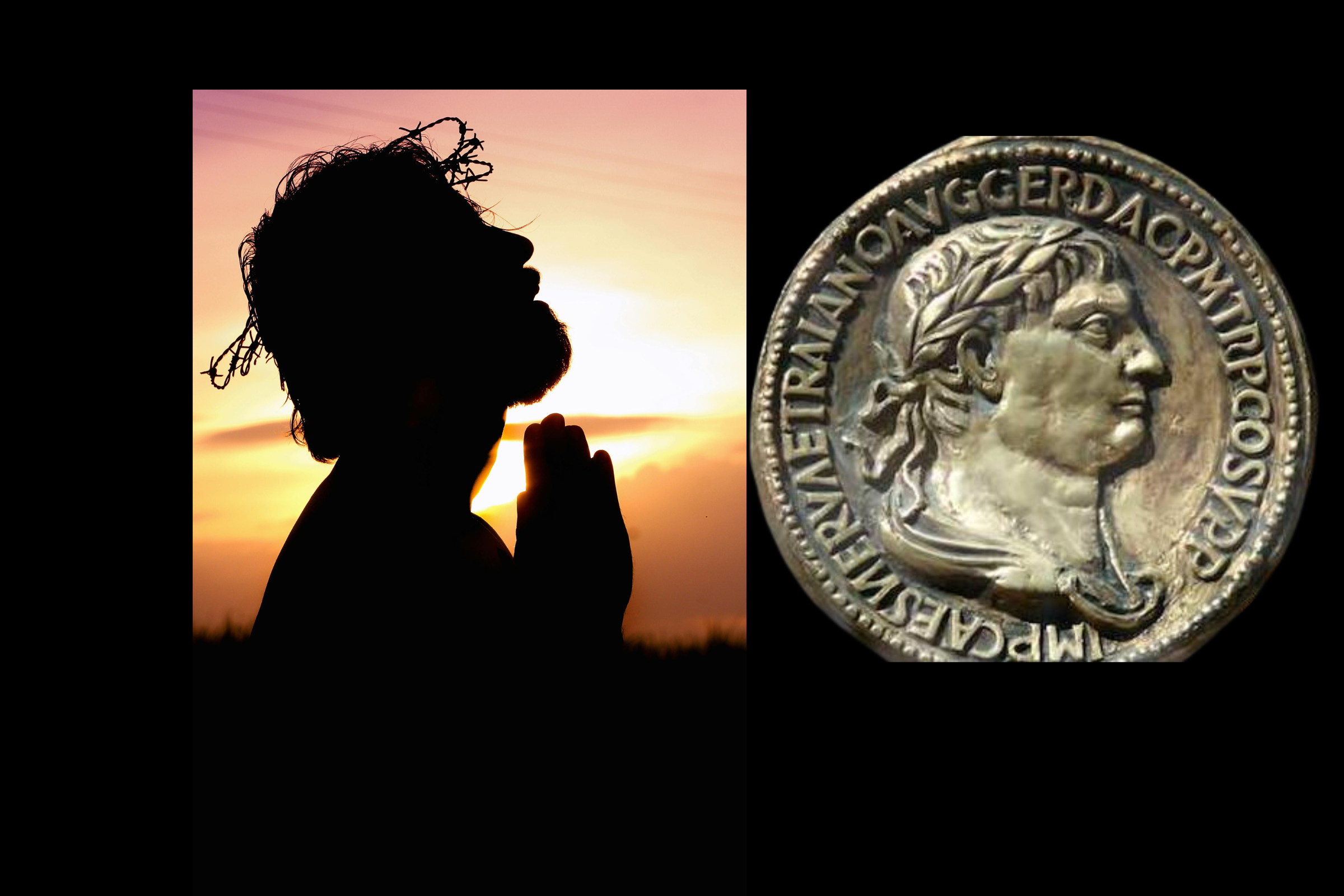
If he refused to pay the tax, he would satisfy the Israeli nationalists but would supply convenient proof of Jesus’ treasonable attitude, which would be useful in persuading the Roman government to dispense with Jesus.[iv] N.T. Wright says that the question raised comes with a health warning. “Tell people they should not pay, and you might end up on a cross.”[v] If he pays the tax he would forfeit some of his following as he has tacitly sided with Rome. He will also denigrate money to something that only operates in the secular realm. The Roman denarius was an offensive coin to Jews as it had the image of Caesar on it, and Jews were forbidden to make images of people, especially ones like Caesar who is described as a “son of a god.”[vi] For normal commerce, they had minted copper coins without the image of Caesar on it in deference to the Jews. Nothing could have prepared them for Jesus’ response.
Jesus responds vehemently with almost verbal violence. He calls them “hypocrites,” one of the most terrible accusations that can be made of someone, as it touches what we claim to hold most dear, our faith. Then he asks for a coin and requests that they state whose image is on it. Ancient coins usually had two sides, one of which had a divine character, a god, or a Caesar-god, and the other side a secular symbol. American money even has written on it, “In God We Trust” on one side. The Canadian Toonie (2-dollar coin) has an image of the Queen on one side and a Canadian black bear on the other. In this case, the fact that his questioners had one of the image-bearing coins “cut the ground from under their feet.” R.T. France suggests, “They were using Caesar’s money, so let them also pay his taxes!”[vii] “Give back,” Jesus says, “to Caesar what is Caesar’s, and to God what is God’s” (ver 21). What was Jesus doing?
What this response means is critically important. Jesus was not suggesting, as is commonly practised in Christianity today, that ten percent of our money goes to the church, thirty per cent (more or less) is paid to Caesar or the current government in taxes, and the rest is ours. This separates the holy use of money from the secular use, which is the insidious dualism that reigns almost everywhere today.
In this extraordinary incident Jesus asserts that money can have a holy purpose. He simultaneously fulfilled his desire to meet a divine purpose and this-worldly obligations at the same time. And teasingly, he left open the question of what “giving to God” means. To get behind this, we must examine the influence of the Old Testament, the surrounding Greek culture, the development of a growing dualism of sacred-secular in the history of the West and East, all factors in the insidious dualism that reigns in the church today.
The Old Testament Factor
Under the Old Covenant, people had to learn to distinguish between the ordinary and the holy: “This is a lasting ordinance for the generations to come, so that you can distinguish between the holy and the common…” (Lev 10:10-11). So there were holy places (the tabernacle, the temple, holy Mount Sinai, holy acts (festivals, offerings, worship), and holy people (prophets, priests and princes). But under the New Covenant, we have the radical universalization of holy life and service. There is now the priesthood of all believers (1 Pet 2:5), the prophethood of all believers (Acts 2:17), and the princely rule of all believers (Rev 22:5)[viii] All of life can be holy (Luke 11:33-36). Holiness is not separating from ordinary life in matters such as handling money, but holiness is dedicating everything to God and God’s purposes. Romans 12:1-2 expresses it as the presentation of our entire bodily life to God as “a living sacrifice”…as this is “true worship” or “spiritual worship.” One hundred per cent of life dedicated to God and God’s purposes, including all our seemingly “secular” obligations. Therefore, first-century Christians did not go to church primarily to worship. There is nothing in the New Testament that indicates that the main thing they did when they gathered was to worship. They were worshipping all week long. They went to church for fellowship and mutual edification.[ix] Jesus the carpenter-entrepreneur smashed the old dualism and introduced a way of life in which all was holy, from tilling the soil to trading on the stock exchange, albeit often if not always mixed with sin and deconstruction in this life. There is no “secondary grade of piety” attached to working in business, homemaking, being an artist, a ditch-digger, and handling money. And from time to time through history, this life-giving and life-transforming perspective has been rediscovered against the force of gravity that keeps pulling people back into dualistic thinking and living.
Jacob Needleman comments that, “Followers of the ‘mixed life’ [action and reflection] in the late Middle Ages seem to have understood that in order to bring the spiritual life into the whole of life, it is necessary to bring the whole of life into the realm of spiritual work, to allow, as it were, everything into the monastery.”[x] But it is a fragile union of sacred and secular. Indeed, Needleman concludes. “It is inevitable that religion becomes worldly under the pretext of making the worldly life religious.”[xi] In due course, we must unpack this, for this is exactly what happened. One influence on the demise of this radical synthesis of life, all of it including the use of money, came from the surrounding Greek culture.
The Greek Philosophical Factor
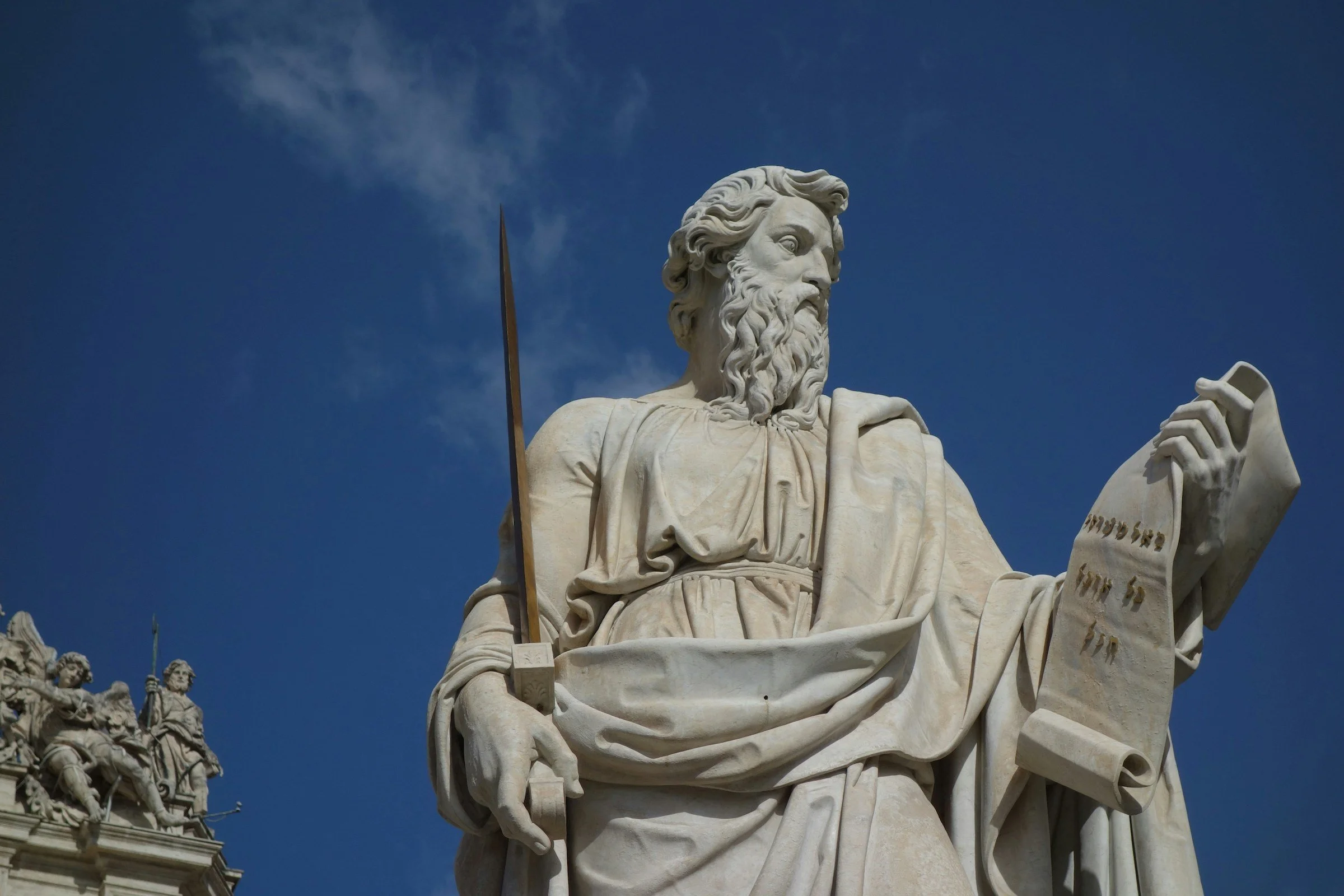
In the Greek world the body was considered the shell, generally an evil covering, for a precious immortal soul. Salvation was getting the soul out of the body. Death was a friend as it liberated people from the prison of physical life. The future, for the Greek world, was the immortality of the soul. In contrast the Christian hope is not the immortality of the soul but the resurrection of the body, whole person transfiguration in a new heaven and new earth.
But this view of the human person, higher and lower, that Greek culture generally envisioned was like a thick fog surrounding a city, permeating the thought life and spirituality of early Christians.[xii] Plotinus, the single most influential philosopher of the ancient world, and one who profoundly influenced Augustine and Western Christianity, stated in a classic way the great opposites of spirituality and materialism. “The pleasure demanded for the Sage’s life cannot be in the enjoyments of the licentious or in any gratifications of the body…. Let the earth-bound man be handsome and powerful and rich, and so apt to this world that he may rule the entire human race: still there can be no envying of him, the fool of such lures.” The Sage, in contrast, will wear away the “tyranny of the body…by inattention to its claims.”[xiii] Trade for Aristotle was essentially suspicious if not downright perverted. “Anybody who does anything for pay is by nature not a truly free person.”[xiv]
Most of the early church fathers took on this “upper and lower” approach to life: the higher for the monk, nun, priest and pastor who reject ordinary work in the world, and the lower for the person who works in the world. This became incarnated in the supremacy of medieval monasticism, the way of Mary over and against the way of Martha. The result was that by the fifteenth century only the monk, nun and priest had callings. Ordinary Christians had no vocation. Karl Barth’s summary is apt: “According to the view prevalent at the height of the high Middle Ages [secular work] only existed to free for the work of their profession those who were totally and exclusively occupied in rendering true obedience for the salvation of each and all.”[xv] This is not far from the contemporary idea that business people in the church are “walking cheque books” needed to support the pastor.[xvi] So what happened?
The Partial Reformation Factor
In the sixteenth century Protestant Reformation Martin Luther was reacting to Medieval dualism. To be converted was to join the monastery. Luther said, “Therefore I advise no one to enter any religious order or the priesthood, indeed, I advise everyone against it – unless he is forearmed with this knowledge and understands that the works of monks and priests, however holy and arduous they may be, do not differ one wit in the sight of God from the works of the rustic laborer in the field or the woman going about.”[xvii] But in reacting to monasticism as a kind of salvation machine Luther unwittingly and unintentionally contributed to the radical secularization of life that obtains in most of the west today.
The story of this is ably and deeply recounted in Craig Gay’s The Way of the (Modern) World. He explores the well worn work of Max Weber to illuminates this process. Calvinism taught that some are elected to be saved and others to be damned. This ratcheted up the anxiety level in a believer. Previously someone who seriously wanting to prove they were among the elect would go to the monastery. Now that the monastery door was slammed shut by the reformers, the only place to prove one’s election was in one’s worldly calling. But Calvinism taught thrift, that you do not spend everything you make by zealous work in the world. This “worldly asceticism,” Weber argues is exactly the situation needed for capitalism to thrive. His analysis is largely though not completely true. Commenting on this, Gay offers two possible explanations for the contemporary situation. Either practical rationality [the process of making decisions not be custom and tradition but by calculable and practical outcomes] has somehow received divine and religious sanction, or the religious understanding of life has become “debunked and disenchanted” to give free reign to “pragmatism and egoism.” In fact the second has come out of the first, namely that the sanctioning of practical reason and the worldly asceticism led to the disenchanting of everyday activities such as work and making money.[xviii] Ironically, as Gay puts it, “Christianity appears to be largely responsible for its own demise in the modern period.”[xix] Money turns out to be central to this process.
With the disenchantment of work and exchange, money makes rational calculation and accounting possible but it does this by reducing everything to “mere quantities.”[xx] This is something which the German social philosopher Georg Simmel in his massive volume elaborates. [xxi] So, as is said of some merchants, they know the price of everything but the value of nothing.
With Puritanism, and later Puritans in particular, things go a notch further. Early Puritans, such as William Perkins saw work and ministry above the secular line in the realm of sacred entirely encompassed within God’s call which comes to everyone. Everyone has the same “General” calling, which is to follow Jesus as a disciple, to invoke the name of God and worship him. But the “Particular” calling is unique to each individual. Perkins describes it this way: “the execution of some particular office, arising of that distinction which God makes between man and man in every society”[xxii] – the magistrate as he governs his people, the minister in teaching his people, the physician in bringing health, the master in governing his family, the merchant in his business etc. These callings, indeed all callings, are for the common good and are holy. “Adam as soon as he was created, even in his integrity, has a personal calling assigned to him by God, which was to dress and keep the garden….”[xxiii] And therefore “all who descend from Adam must need to have some calling to walk in, either public, or private, whether it be in the church, or commonwealth, or family.”[xxiv] You will note there is no distinction in holiness or “being called” between the minister-pastor and the tradesperson in contrast with Calvin who unwittingly assigned to the Protestant preacher a unique “secret” call and attributed to the Protestant preacher an aura previous associated with the celebration of the mass in the Catholic tradition.[xxv] So the slide had begun. And later Puritans lost the synthesis.
R.H. Tawney’s study, Religion and the Rise of Capitalism, documents the slide. “Plunged in the cleansing waters of later Puritanism, the qualities which less enlightened ages had denounced as social vices emerged as economic virtues. They emerged as virtues as well.”[xxvi] So the Western Christian movement drifted, without the intention of the Reformers, from a largely destroyed dualism to a Deistic secularized, this-worldly religion attempting to make improvements in this-worldly conditions. A former theology professor at Regent College, Klaus Bochmuehl, judged that this arose from an overemphasis on the importance of the so-called “civil” vocation for Christian faith and life.[xxvii] Meanwhile the Catholic Church continued with the largely sacred-secular divide until Vatican ll which, remarkably, ushered in a wealth of perspective, resources and practical integrations of faith and life which the National Centre for the Laity in Chicago continues to catalogue.[xxviii] Ironically the editor of their journal quotes a zinger from Cardinal Francis George, OMI, that “Everyone in the U.S. is Protestant, including Catholics.” By this he means, even Catholics now treasure individual rather than social rights and the road to upward mobility is paved with hard work.[xxix]
So, in the West we have a largely secularized Christianity with substantial elements of the old dualism. Pastors are holy people and certain activities and services are holy while dealing with filthy lucre is just what we have to do with our work and life in the world. And this largely dualistic and substantially secularized version of Christianity we have brought to the world through the global mission of the church. Of course there were exceptions. But the nature of mission work itself, largely financially supported from a home country communicated a powerful nonverbal message about money.
The Eastern Religion and Philosophy Factor
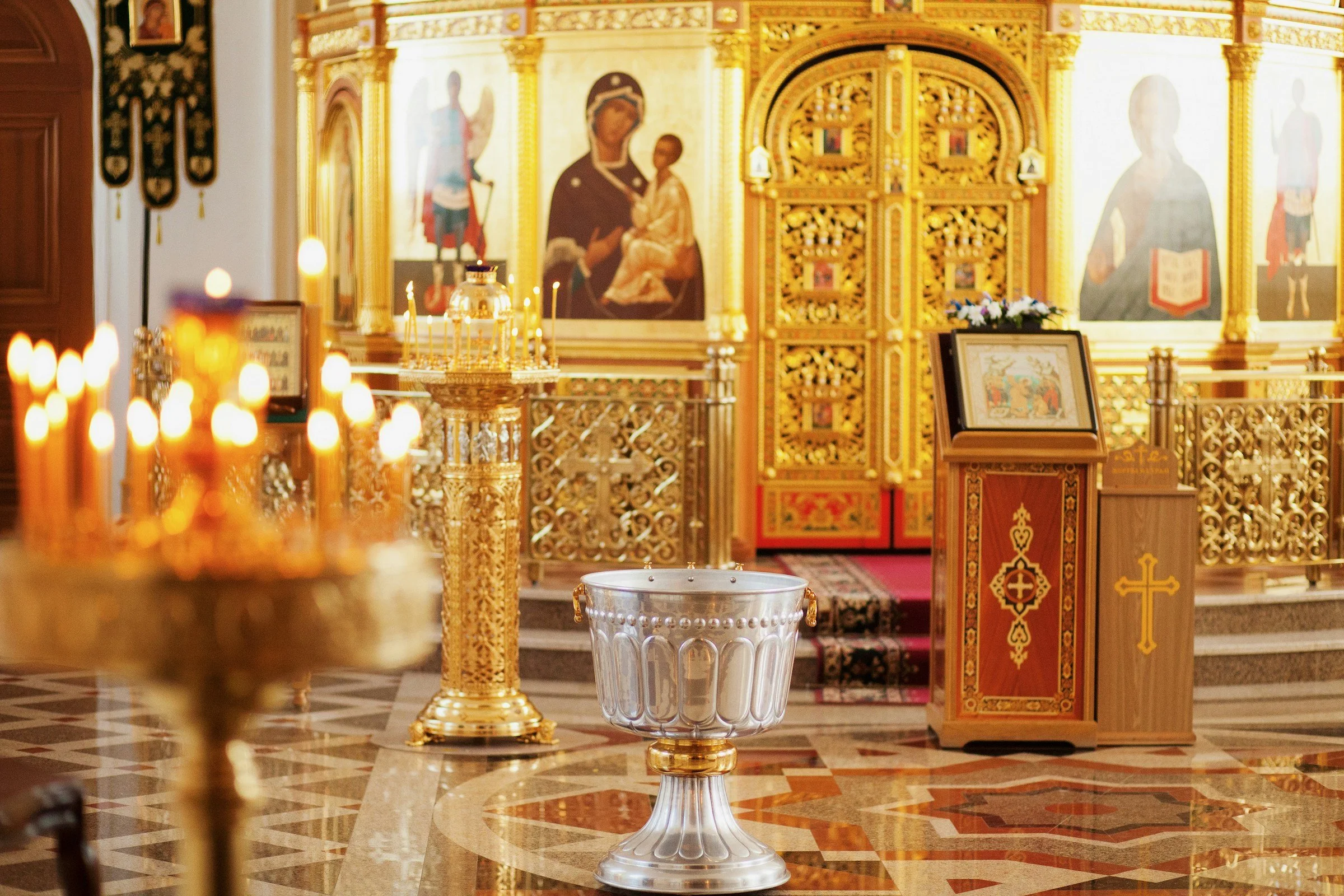
The East cannot be dealt with a single homogenous whole but there are common characteristics and influences which, added to the witness of missionaries, has in some cases made the dualism even more extreme in the East than in the West. Not all missionaries, of course, carried this dualism in their hearts and tongues. Early Catholic missionaries in China took their place in the court and were teachers of mathematics and science. But generally, the message was a two-level spirituality. If you are really serious about following Jesus you will become a missionary or a pastor. This was exacerbated by three additional influences: Shamanism, Buddhism, and Confucianism. This is especially true in one country.
Korean Christianity is arguably the most dualistic in Asia. In his study of it, Paul Cho notes that “from its beginning, Korea was a country defined by its passion for religions.”[xxx] Shamanism is a major influence. One striking characteristic of Korea’s shamanism, Cho notes, is the “ranking of gods into different categories. The head of all the gods is known as “Hanamim,” which Koreans considered as the Supreme Being with no accessibility.”[xxxi] Then, below, there are other gods that serve as “the bridge to the transcendent deity within this system. For example, in this system, there are ‘Gods of the air, spirits of the earth, spirits of water, nameless spirits and ancestral spirits, and ancestral spirits [that] comprise the spiritual realm of Korean shamanism.’”[xxxii] Cho comments that the modern practice of shamanism in Korea is not much different, except perhaps that shamans today are not from the ruling class but are mostly women.
So, Cho argues, Shamanism has played a major role in the formation of pastoral identity in Korea and the Christianity they proclaim. Many of today’s Korean pastors’ behaviors resemble so much of the Shamans’ behaviors. For example, many of Korean Christians who in the past would have relied on Shamans for healings and prosperity now have chosen “Christianity instead as a more appropriate, effective, and modern tool to the same end.”[xxxiii] The wide sway of the prosperity gospel in Korea is a stunning example of how faith in Jesus means healing and material prosperity. “Such tendency to elevate pastors as more sacred people is well captured in the constitution of the Presbyterian Church of Korea (PCK), regarding how the Lord’s Supper ritual should be carried out: “Regarding the Lord’s Supper, regardless of any circumstance, non pastors can never perform the Lord’s Supper. The Lord’s Supper must only be performed by ordained pastors who are called by God to be His ministers.”[xxxiv] Pastors are supernatural people who have the special ability to intercede with God. A second influence is Buddhism.
Essentially, Buddhism is a practical philosophy on how to deal with suffering. By engaging in an eight-fold path of wisdom, ethical conduct, and mental discipline, one can attain Nirvana which is the “only end of suffering.”[xxxv] These enable a person to disengage with the world. Pastoral identity in Korea, Cho argues, has been profoundly influenced by this. Essentiall,y pastors are monks who have given up worldly enterprises, sometimes highly remunerated professions, to devote themselves to attain holiness and to be God’s servants. In harmony with Buddhism, Korean pastors preach a lot about the afterlife, where there will be no pain or suffering. Young-hoon Lee advises, “Christian eschatology includes in itself the danger of denying the present life and over-emphasizing the other world.”[xxxvi] But there is a third influence—Confucianism.
Throughout Asia, Confucianism is a powerful influence on family, relationships and business. It is essentially a philosophy inculcating loyalty, filial piety, benevolence and trust. The aim is to create harmony in human relationships. But it does this through a hierarchical ordering of people with appropriate roles and obligations between people: sovereign and subject, father and son, husband and wife, senior and junior, friend and friend. It is widely acknowledged that, especially in Korean Christianity, Confucian culture dominates. “Leadership is sometimes too authoritarian. The elevated status of pastors hinders biblical servant-leadership, promotes division and personality cults, and stunts discipleship,” says Jason Mandryk in Operation World.[xxxvii] In contrast, Biblical Christianity proclaims that the material world is good, that engaging in enterprise (and handling money) can be a calling of God equal to that of the pastor.
In summary, the dualism that persists globally among Christian people has multiple sources: the Greek philosophical world, a persistence of Old Testament patterns, the twisting and decline of the rediscovery of everyday life in the Protestant Reformation, and the influence of other faiths and philosophies, including Shamanism, Buddhism, and Confucianism, especially in Asia.
So how then do we reconcile both sides of the coin, God and Caesar? How to we give to Caesar what is Caesar’s and to God what is God’s? This can happen only with a thoroughgoing integration of faith and life. R.T. France, commenting on the passage in Matthew, suggests that “this is not the rigid division of life into the ‘sacred’ and the ‘secular’, but rather a recognition that the ‘secular’ finds its proper place within the overriding claim of the ‘sacred’.”[xxxviii]The single or sound eye, Jesus once said (using the eye as a metaphor for faith) means that the whole of the body will be full of light. Then Money will become a sacrament, a gift, and a grace. But that does not mean blurring the line so that everything becomes divine, something that will be expounded in the rest of the book. Jesus deals with mammonism (deifying money) by inviting people to enter a different worldview, the kingdom worldview, in which all of life is holy.[xxxix] Scripture shows that money mixes the material with the spiritual grace, an instrument of what we can do in both the material and spiritual realms (and at the same time). God and Caesar—not separated and not merged but when it comes to money, all for God since it is God’s money anyway. The results of this can be a re-energizing of the kingdom mission of the people of God.
Paul Williams, a research professor at Regent College, aptly summarizes the foregoing discussion on a hopeful note: “A faulty theology of vocation and work was a significant contributor to the secularisation of Western society. Recovery of a fully biblical theology of vocation and work [and we would add money] has the potential to energise a radical new missionary movement in the world today.”[xl]
References:
[i] Jacob Needleman, Money and the Meaning of Life (New York: Doubleday, 1991), 51.
[ii] John C. Haughey, S.J., The Holy Use of Money: Personal Finance in Light of Christian Faith (Garden City, NY: Doubleday and Co., 1986).
[iii] Eusebius of Caesarea, Demonstration of the Gospel, quoted in W.R. Forrester, Christian Vocation (New York: Scribner’s, 1953), 43.
[iv] R.T. France, Matthew: Tyndale New Testament Commentaries (Grand Rapids: Eerdmans, 1985), 314.
[v] Tom Wright, Matthew for Everyone, Part 2 (London: SPCK, 2002), 87.
[vi] France, Matthew, 315.
[vii] France, Matthew, 315.
[viii] See how Yves Congar prepared the way for the radical rediscovery of the dignity and ministry of non-clergy members of the people of God through Vatican II by showing in Scripture that prince, prophet and priest were not pope, bishop and parish priest but the whole believing community. Y.M.J. Congar, Lay People in the Church: A Study for a Theology of the Laity, trans. D. Attwater (Westminster, MD: Newman Press, 1957).
[ix] I. Howard Marshall “How far did the early Christians worship God?” Churchman 099/3 1985
[x] Needleman, Money and the Meaning, 169, emphasis mine.
[xi] Needleman, Money and the Meaning, 167.
[xii] See Lee Hardy, The Fabric of This World (Grand Rapids: Eerdmans, 1990).
[xiii] Quoted in Max Stackhouse et al, On Moral Business: Classical and Contemporary Resources for Ethics in Economic Life (Grand Rapids: Eerdmans, 1995), 39.
[xiv] Quoted in Gordon Preece, “Business as a Calling and Profession: Towards a Protestant Entrepreneurial Ethic” (unpublished manuscript delivered at the International Marketplace Theology Consultation, Sydney, June 2001), 14.
[xv] Karl Barth, ‘Vocation,’ in Church Dogmatics, trans. A.T. Mackay, T.H.L. Parker, H. Knight, H.A. Kennedy, and J. Marks, vol 3, part 4:601 (Edinburgh: T&T Clark, 1961), quoted in Marshall, A Kind of Life Imposed on Man: Vocation and Social Order from Tyndale to Locke (Toronto: University of Toronto Press, 1996), 22.
[xvi] Some of the above is abstracted from R. Paul Stevens, Doing God’s Business: Meaning and Motivation for the Marketplace (Grand Rapids: Eerdmans, 2006), 40-59.
[xvii] Martin Luther, Luther’s Works. American Edition, 55 vols., eds. Pelikan and Lehman (St. Louis and Philadelphia: Concordia and Fortress, 1955ff), 36:78.
[xviii] Craig Gay, The Way of the (Modern) World: Or, Why It’s Tempting to Live As If God doesn’t Exist (Grand Rapids: Eerdmans, 1998), 140-141.
[xix] Gay, The Way of the (Modern) World, 145.
[xx] Gay, The Way of the (Modern) World, 153.
[xxi] Georg Simmel, The Philosophy of Money, trans. Tom Bottomore and David Frisby (London: Routledge, 2004), 443ff.
[xxii] William Perkins, The Works of That Famous Minister of Christ in the University of Cambridge (London: John Legatt, 1626), 754D.
[xxiii] Perkins, The Works, 555A
[xxiv] Perkins, The Works, 555C.
[xxv] See Calvin’s secret call in R. Paul Stevens, The Other Six Days: Vocation, Work and Ministry in Biblical Perspective (Grand Rapids: Eerdmans, 2000), 154.
[xxvi] R.H. Tawney, Religion and the Rise of Capitalism, 248, quoted in Gay, The Way, 167, Gay quotes Robert S. Michaelson, “Changes in the Puritan Concept of Calling or Vocation,” New England Quarterly 26 (1953): 315-336.
[xxvii] See Klaus Bochmuehl, “Recovering Vocation Today,” Crux 24, no. 3 (1988), 25-35.
[xxviii] Initiatives, In Support of Christians in the World, PO Box 291102, Chicago, IL. 60629.
[xxix] Initiatives, September 2017, No. 234, 1.
[xxx] Paul Cho, “Overcoming Cultural Barriers for Korean Pastors Becoming Tentmakers,” unpublished ThM paper for Regent College, Vancouver, 2016. See also Tong-Shik Ryu, The History and Structure of the Korean Shamanism (Seoul: Yonsei University Press, 1983), 14-15; Sung-Gun Kim, “Pentecostalism, Shamanism, and Capitalism within Contemporary Korean Society,” in Spirits of Globalization: The Growth of Pentecostalism and Experiential Spiritualities in a Global Age, ed. Sturla J. Stalsett (London: SCM Press, 2006), 27.
[xxxi] Colin Lewis, “The Soul of Korean Christianity: How the Shamans, Buddha, and Confucius Paved the Way for Jesus in the Land of the Morning Calm” (A Project for the University Scholars Program, Seattle Pacific University, 2014), 7.
[xxxii] Lewis, “The Soul,” 10.
[xxxiii] John Koo, ed., An Introduction to Korean Culture (Elizabeth, NJ: Hollym, 1997), 194.
[xxxiv] Jaceeun Kwak, “Presbyterian Constitution”, Quizlet, February 2014. Accessed Novmeber 29, 2016, http://quizlet.com/35814505/flasj-cards/.
[xxxv] Andrew Powell, Living Buddhism (New York: Harmony Books. 1989), 28.
[xxxvi] Uoung-hoon Lee, The Holy Spirit Movement in Korea: Its Historical and theological Development (Oxford: Regnum Books International, 2009), 46.
[xxxvii] Jason Mandryk, Operation World (Colorado Springs, CO: Biblica 2010), 511.
[xxxviii] France, Matthew, 315-316.
[xxxix] John C. Haughhey, S.J., The Holy Use of Money: Personal Finance in Light of Christian Faith (Garden City, NY: Doubleday, 1986).
[xl] In an unpublished lecture, Regent College, “Marketplace Theology,” 2015.
Note: The above article is substantially chapter 4 in Clive Lim and R. Paul Stevens, Money Matters: Faith, Life and Wealth (Grand Rapids: Eerdmans, 2021).